

One of the things that I have always wanted to learn, is how to make a good croissant. I have tried in the past in Vancouver, with limited success so decided to take a class here in Paris to learn how to make these delectable treats.
La Cuisine Paris is a wonderful school located just ten minutes from our apartment. In three hours, they will teach you how to master les viennoiseries, which describe all the pastries you can make from the laminated dough that is used for croissants. First off, our lovely instructor, Segolene, told us that success relied on the butter that was used. She recommended butter that was a minimum of 82% fat, though 86% would be better. In Canada, it is not always easy to find premium butter, though in the last few years, this has changed a bit with some Canadian producers like Cows from PEI and L’Ancêtre from Quebec making higher fat butters. Definitely worth seeking out, I think, if I am going to try this at home.
Segolde shared many tricks and tips with us. If you have made croissant dough before or ever watched The Great British Bake-Off, you will know that the dough is made by wrapping the dough – the détrempe – around a sheet of butter, as if the dough were wrapping paper and the butter was the gift (which, let’s be honest, it kind of is). There is definitely many ways to do this, but Segolde advised us to use a simple folding method where the butter was rolled out to a rectangle two-thirds the size of the dough, and then the dough wrapped around it, in a letter fold. Rolling butter into a rectangle can be a pretty messy task, but Segolde taught us the nifty trick of wrapping the butter in parchment folded to the size we wanted, and then rolling the butter within the parchment.

While the butter chilled, we made the dough by hand. Segolde’s method had us making a ring of dry ingredients and then working the wet in slowly, similar to the way pasta is made.

Once the dough was made and kneaded, we rolled it into a rectangle and wrapped it around the chilled butter and began our turns. Segolde showed us how to create a rectangle from our dough ball – simply make four diagonal slashes that go half the depth of the ball from the corners to the centre and then fold open the corners to create a rectangle – and maintain the shape by never rolling all the way to the top and bottom edges. After the initial wrapping of the dough around the butter, we do a simple (letter) turn to create five layers of butter and dough, followed by a complex (book) turn to quadruple this to 20 layers. You can stop there, or do one more simple turn to get 60 layers total. Beyond this, the layers become too thin and collapse. We did this all in one go, though at home, Segolde advised resting the dough in the fridge for 30 to 60 minutes between turns.

Once the dough was ready, the real fun began. We cut the dough into triangles for classic croissants. Segolde had us gently stretch the triangles by holding them at the base with the tip dangling down, and “petting the triangle like a puppy’s ear”. The base of the triangle is nicked and the edges pulled apart to make an Eiffel Tower, and then the croissant is gently rolled up.


With the remaining dough, we made chocolatines…

and vanilla and pistachio pastry cream to make filled delicacies.


The fillings were added to the dough to make several different viennoiseries.


With the remaining pieces of dough, we made pinwheels and baskets, which we added jam, nuts, and chocolate to.


Segolde gave us a cheat sheet so we could recreate all the shapes.

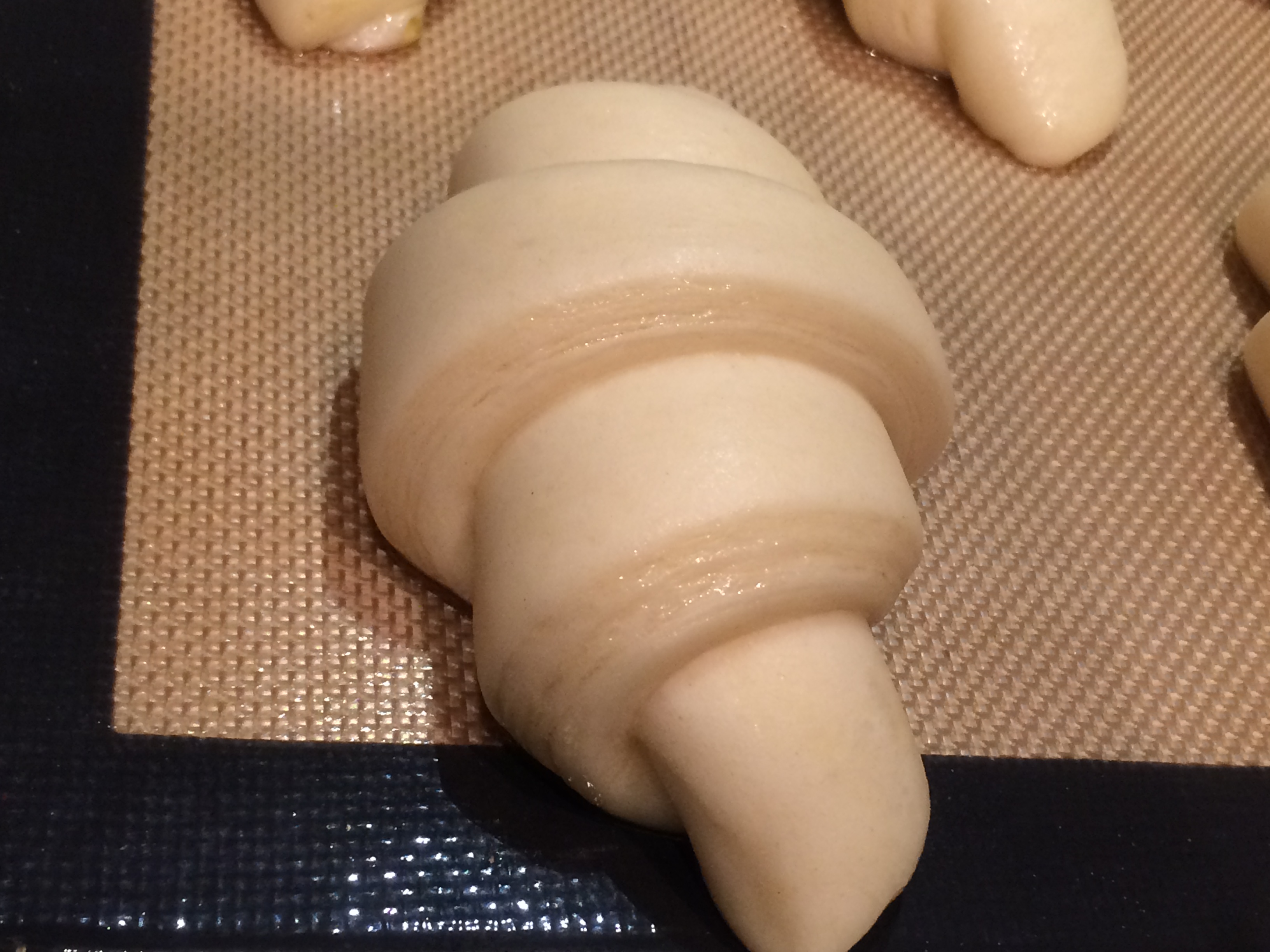
By this time, the croissants had risen, and the lovely layers from our hard work were clearly visible.

Twenty minutes later, we were able enjoy the pastries, fresh from the oven!


I thoroughly enjoyed the experience (can you tell?), and plan to go back for more courses. La Cuisine Paris also has a cheat sheet for making croissants on their blog if you want to try yourself.
<<Previous post………………………..Next post>>
 boydsinparis.home.blog